
Field Guide · 5 min · June 2026
The Best Snapback for Boating Isn't a 'Boating Hat'
Forget those flimsy, nylon tourist traps. The right hat for a day on the harbor is all about a locked-in fit and looking right from the Duffy to the dock, and we've got the final word on it.
There are two kinds of people on the water in Newport: those who have lost a hat to the wind, and those who are about to. It’s a rite of passage. You’re cruising past the Balboa Pavilion, you catch that crosswind whipping around the Fun Zone, and poof. Your favorite lid is floating toward the sea lions, a sacrifice to the harbor gods. The thing is, it’s an avoidable tragedy. The problem isn’t the wind; it’s your hat.
Beyond the Skipper Cap and Bucket Hat Brigade
Let’s clear the air. The typical “boating hat” is a study in compromise, and not the good kind. It’s usually some floppy, shapeless bucket hat that screams ‘lost tourist’ or a technical-looking cap made of whisper-thin nylon with more vents and drawstrings than a parachute. They’re designed with a single-minded focus on function that completely ignores a critical fact: you still have to look at yourself in the mirror.
These hats serve a purpose, sure, but they have a distinct ‘off-duty-lifeguard’ or ‘suburban-dad-on-vacation’ vibe that doesn’t quite land right when you’re pulling up to the docks at Lido Marina Village. On the other end, you have standard fashion hats that look great on land but are one gust away from becoming an expensive piece of flotsam. The solution isn’t to choose between style and stability. It's to demand both.
Material Science for the Marina
Fabric is where the battle is won or lost. That crinkly, featherlight performance polyester feels cheap because it is. It might dry fast, but it slides off your head, reflects light with a weird sheen, and loses its shape the second it gets damp. It offers zero substance. What you actually want is a material with some structure and character, something that feels as good as it looks.
A premium cotton twill or a strategic poly-cotton blend is the answer. It has enough weight to feel secure on your head and hold its form against a breeze. It’s breathable, so you’re not trapping heat on a glassy Back Bay afternoon. Crucially, a quality twill absorbs a bit of moisture—from sweat or sea spray—without wilting. It develops a character over time, molding slightly to you, unlike a synthetic cap that looks the same on day one and day one hundred, which is to say, sterile.
The Anatomy of a Proper On-Water Lid
A hat's architecture determines its sea-worthiness. First, the bill. You need shade, not a sail. A bill that’s too long and flat is basically a wind paddle, designed to catch every updraft and launch itself off your head. You want a medium-length bill with a slight, natural curve. It cuts the glare off the water without obstructing your view of the channel markers or the crew at the Wedge.
Then there's the fit, the most critical element. This is where the snapback closure reigns supreme. Fitted hats are a gamble—too tight and you get a headache, too loose and it’s gone. A ‘dad hat’ with a flimsy strap closure will loosen up as the day goes on. A snapback offers micro-adjustments on the fly. Wind picking up as you head out of the jetty? Click it one notch tighter. Calm day in the Rivo? Loosen it up. It’s a secure, custom fit every time, no exceptions. Paired with a structured, five or six-panel crown that won't collapse when damp, you have a hat built for the coast.
Your hat should be the last thing you think about and the first thing they notice.
The Harbor Uniform: Dialing in the Vibe
Style on the water is about looking like you belong there. It’s effortless, but deliberate. For a slow cruise on an electric boat, a clean tee, walk shorts, and no shoes is the play. But the hat is what anchors the look. It needs to be understated, well-made, and confident. It’s the difference between looking like you own the boat and looking like you rented it for the hour.
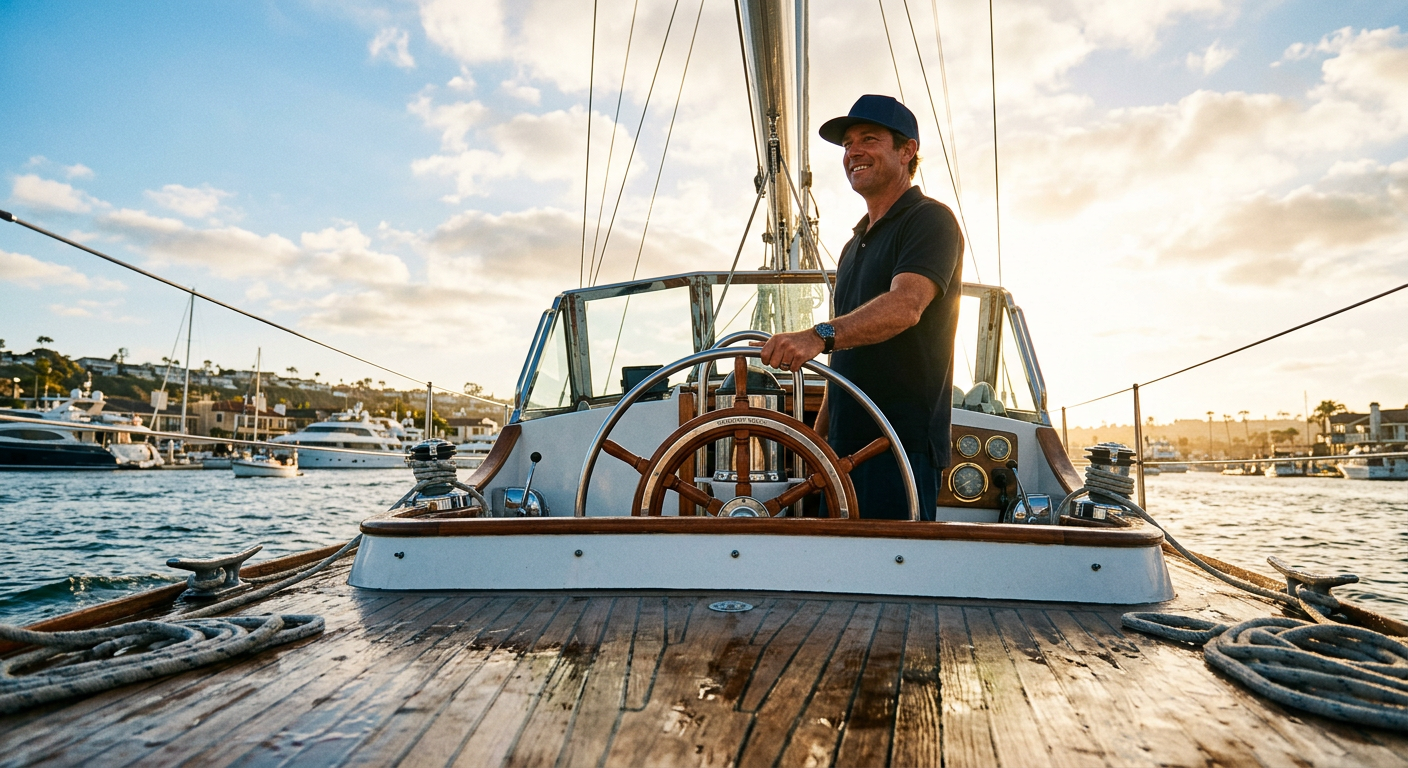
A solid, dark-colored cap is the most versatile piece in your arsenal. It works with everything and never feels loud. The franklin-golf-snapback, for example, nails this balance. It's built with a structured crown and a premium fabric that holds up, but the aesthetic is pure, clean coastal style, not a piece of technical gear. It's the kind of hat that looks just as right when you're grabbing a post-sail beer at the Newport Pier as it does when you're navigating the channel.
When you’re making the run to Catalina, things get a bit more serious, but the principles hold. The wind is real, the sun is unforgiving. You might throw on a lightweight hoodie or windbreaker, but the hat stays. The secure fit of a quality snapback means you aren't constantly grabbing for it. You can focus on the destination, knowing your gear is locked in.
From Sea Legs to Shore Leave
The ultimate test for the best snapback for boating is how it performs once you're back on solid ground. A true coastal staple doesn't get tossed onto the console of the truck. It stays with you. It’s the hat you keep on when you stop at Bear Flag for a poke bowl or meet friends at Mutt Lynch's. Its versatility is its strength.
A specialized ‘boating hat’ looks ridiculous anywhere but on a boat. It screams function over form. But a well-designed cap transitions seamlessly. It doesn't look out of place with salt spray on the bill at a casual dinner in Corona del Mar. It has the quiet confidence of a piece that was chosen because it works everywhere, especially here. It’s not just an accessory; it’s a part of the local uniform.
So next time you’re getting ready for a day on the water, forget the gimmicks. Don’t compromise. The best hat for the dynamic coastal environment is one that respects both the elements and the unwritten rules of Newport style. It’s a hat with substance, structure, and a perfect fit. Find one, lock it in, and save your offerings to the harbor gods for something else.